

The Gaia Hypothesis
James Lovelock’s theory that our planet is alive

·

“We are all connected to each other biologically, to the earth chemically, and to the rest of the universe atomically. That’s kinda cool! It’s not that we are better than the universe, we are part of the universe. We are in the universe and the universe is in us.”
Neil deGrasse Tyson, American astrophysicist, planetary scientist, author, and science communicator.
“Action on behalf of life transforms. Because the relationship between self and the world is reciprocal, it is not a question of first getting enlightened or saved and then acting. As we work to heal the earth, the earth heals us…
Knowing that you love the earth changes you, activates you to defend and protect and celebrate. But when you feel that the earth loves you in return, that feeling transforms the relationship from a one-way street into a sacred bond…
This is really why I made my daughters learn to garden — so they would always have a mother to love them, long after I am gone.”
Robin Wall Kimmerer in “Braiding Sweetgrass: Indigenous Wisdom, Scientific Knowledge, and the Teachings of Plants”
The Gaia hypothesis was proposed by maverick scientist James Lovelock, who suggested that the world has evolved into an animate, self-regulating organism, with living creatures interacting with their inorganic surroundings, a holistic system that helps maintain conditions for life on earth.
The notion that the Earth is alive is not new. Indigenous people have believed this since the start of human history. The concept occurred regularly in Greek philosophy and continued into the Middle Ages. The idea was not always welcomed by mainstream religions, and the Italian Dominican friar, philosopher, mathematician, poet, cosmological theorist, and Hermetic occultist Giordano Bruno, was burned at the stake, just over 400 years ago, for claiming that the Earth was alive and that other planets could be also.
Many scientists have also expanded on the idea of our planet as a living being. For example, Leonardo da Vinci regarded the human body as a microcosm of the Earth, and the Earth as the macrocosm of the human body. The geologist James Hutton described the Earth as a self-regulating system in 1785, in a lecture before the Royal Society in Edinburgh. Hutton thought that the proper study of the Earth was through physiology and compared Harvey’s discovery of the circulation of blood in our bodies to the cycling of the elements. The Russian mineralogist and geochemist Vladimir Ivanovich Vernadsky, 1863–1945, is most noted for his 1926 book “The Biosphere”, in which he inadvertently worked to popularise Eduard Suess’ use of the term biosphere in 1885, as the geological force that shapes the earth, creating dynamic disequilibrium, which in turn promotes the diversity of life.
So the idea of our Earth as a living being has been around since the start of human history. However it was Lovelock who is credited with bringing these themes together into a comprehensive hypothesis.
James Lovelock
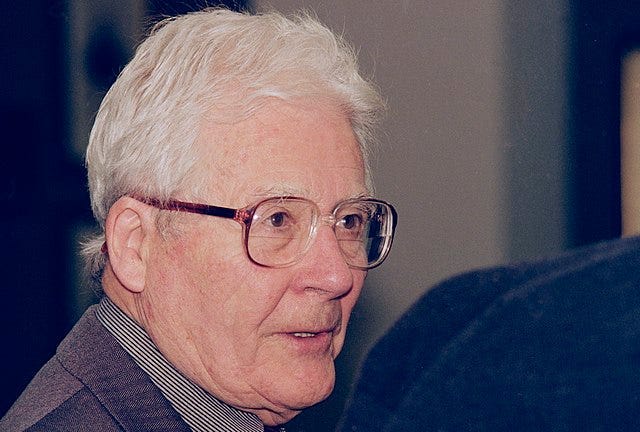
James Ephraim Lovelock, CH, CBE, FRS, was born on 26th July 1919. He was raised in humble circumstances, in Letchworth Garden City. His mother’s suffragette stance in her youth was a sign of later non-conformity of thinking in the family. They moved to London where he attended Strand School. Lovelock could not at first afford to go to university, which he later credited as having helped him avoid being too specialised, and giving him the ability to see the bigger picture. His generalist approach enabled and encouraged joined-up thinking, and collaborative work across disciplines, including astronomy, medicine, geology and zoology.
After leaving school, Lovelock worked at a photography firm, attending Birkbeck College during the evenings, before being accepted to study chemistry at the University of Manchester, where he was a student of the Nobel Prize laureate Professor Alexander Todd.
After graduating, Lovelock was employed at a Quaker farm, before taking up a Medical Research Council post, working on ways to shield soldiers from burns. As an early sign of his non-conventional and principled approach, he refused to use the shaved and anaesthetised rabbits that were deployed to simulate burn victims in experiments, and instead exposed his own skin to heat radiation, an experience he describes as “exquisitely painful”.
His student status enabled temporary deferment of military service during the Second World War, and he registered as a conscientious objector. He later abandoned this position when Nazi atrocities came to light, and he tried to enlist in the armed forces, only to be advised that his medical research was too valuable for the enlistment to be approved.
In 1948, Lovelock received a PhD degree in medicine at the London School of Hygiene and Tropical Medicine. He spent the next two decades working at London’s National Institute for Medical Research.
In the mid-1950s, Lovelock seems to have overcome his desire to avoid harm to animals, and experimented with the cryopreservation of rodents, determining that hamsters could be frozen with 60% of the water in the brain crystallized into ice with no adverse effects recorded. Other organs were shown to be susceptible to damage. The results were influential in the theories of cryonics.
Lovelock has made several other important contributions. He invented the electron capture detector in the late 1960s, that was crucial in identifying the hazardous impact of chlorofluorocarbons (CFCs). These chemicals are responsible for the partial destruction of the ozone layer and were widely used in aerosols and refrigerators, until they were banned by international treaties.
The sensitivity of the electron capture detector was also influential in detecting pesticide residues in all living things on Earth, from penguins in Antarctica, to the milk of nursing mothers in the USA. The horror behind this discovery and the impact of pesticides on the natural world was influential on Rachel Carson in writing her seminal book “Silent Spring”.
Unlike Lovelock, some scientists seem to have been at the centre of everything harmful. For example Thomas Midgley Jr. was an American mechanical and chemical engineer, who had the dubious distinction of being behind both the addition of lead to petrol, and formulating some of the first CFCs, perhaps not the greatest of contributions to humanity.
In contrast Lovelock seems to have had a habit of being at the centre of more positive environmental research, and was employed in 1966, three years before the formation of Friends of the Earth, by Shell Research Limited to consider the possible global consequence of air pollution from such causes as the ever-increasing rate of combustion of fossil fuels.
In early 1961, Lovelock was engaged by NASA to develop sensitive instruments for the analysis of extra-terrestrial atmospheres and planetary surfaces, and in particular to detect whether there was life on Mars, by using our own atmosphere for comparison. The Viking program, which visited Mars in the late 1970s, was motivated in part, to determine whether Mars supported life. Many of the sensors and experiments that were ultimately deployed aimed to resolve this issue. Lovelock started by considering the use of soil analysis to judge its suitability to support bacteria, fungi, or other micro-organisms, or to test for chemicals whose presence would indicate life at work, such as proteins and amino acids.
Lovelock became dissatisfied with this approach and his colleagues asked him what he would look for instead. This is where his ability to see the bigger picture, to cross scientific disciplines, and think outside the box, led him to reply:
“I’d look for an entropy reduction, since this must be a general characteristic of all forms of life”.
But how to detect this?
Entropy is expressed by the Second Law of Thermodynamics, that all energy will eventually dissipate into heat which will be universally distributed and no longer available for the performance of useful work. Other scientists including Bernal, Schrödinger and Wigner also concluded that life is a member of the class of phenomena which are open or continuous systems able to decrease their internal entropy, at the expense of substances or free energy taken in from the environment, and subsequently rejected in a degraded form.
So life needs the constant input of energy potent enough to sever chemical bonds, and when life is present there is an abundant flow of energy rather than steady-state chemical equilibrium. As Lovelock so perceptibly deduced, if a reduction in entropy is detected, it can be an indicator of the presence of life.
When looking for these signs of life Lovelock commented on the paucity of systems analysis of the living world around us: “At best, the literature read like a collection of expert reports, as if a group of scientists from another world had taken a television receiver home with them and reported on it. The chemist said it was made of wood, glass and metal. The physicist said it radiated heat and light. The engineer said the support wheels were too small and in the wrong place to run smoothly on a flat surface. But nobody said what it was.”
Of course a television set is just a collection of individual parts. On a scrap heap they are junk, but put them together in just the right way, signals are received and converted, and the set comes to life, a piece of modern-day magic we now take for granted. In this systems context, our bodies can be seen as receivers, temporary interfaces between the living and non-living, decoding signals using our senses.
Finding the improbable

So in designing a test for life from analysing the atmosphere on Mars, Lovelock turned the question round, reverse engineered, and started by looking for what shows there is life on Earth:
“Our results convinced us that the only feasible explanation of the Earth’s highly improbable atmosphere was that it was being manipulated on a day-to-day basis from the surface, and that the manipulator was life itself. The significant decrease in entropy — or, as a chemist would put it, the persistent state of disequilibrium among the atmospheric gases — was on its own clear proof of life’s activity.”
Evidence of life could be detected by looking for the highly improbable, the anomalous. Lovelock likens this to stumbling across an elaborate sandcastle, with moat, drawbridge and portcullis, on a deserted beach. It clearly did not assemble itself out of grains of sand by chance. We instantly recognise that this construction does not fit with the random conditions around it.
Using his insight, Lovelock began designing an entropy-reduction detecting experiment. During work on a precursor of this life-detection program, Lovelock became interested in the composition of the Martian atmosphere, reasoning that any life forms on Mars would be obliged to make use of it (and, thus, alter it). However, the atmosphere was found to be in a stable condition close to its chemical equilibrium, with very little oxygen, methane, or hydrogen, but with an overwhelming abundance of carbon dioxide. To Lovelock, the stark contrast between the relatively inert Martian atmosphere, and chemically dynamic mixture of the Earth’s biosphere, was strongly indicative of the absence of life on Mars.
Lovelock realised that the atmospheres on Mars and Venus are at chemical equilibrium, consisting mostly of carbon dioxide, with no chemical reactions going on, a state referred to by Stephan Harding in “Animate Earth” as “rather like a party where everyone is utterly exhausted and has gone to sleep”. Whereas the Earth’s atmosphere is radically different, being full of gases like oxygen and methane that react quickly and displays an amazing amount of chemical activity, as Harding continues:
“…much like a party in full swing where people have plenty of energy for dancing and for lively conversations.”
Since the purpose of NASA’s interest in Mars was to detect life, the news that its atmosphere appeared lifeless was not entirely welcome news, and Congress decided to abandon the first Martian exploration programme.
Meanwhile back on Earth, rather than our atmosphere being the random product of outgassing, Lovelock saw Earth’s atmosphere as a dynamic extension of the biosphere itself. After several rejections, Lovelock found an editor willing to publish his proposed life-detection experiment, Carl Sagan in his journal “Icarus”.
Lovelock comments on the Earth’s atmosphere:
“The presence of methane, nitrous oxide, and even nitrogen in our present oxidising atmosphere represents violation of the rules of chemistry to be measured in tens of orders of magnitude. Disequilibria on this scale suggest that the atmosphere is not merely a biological product, but more probably a biological construction: not living, but like a cat’s fur, a bird’s feathers, or the paper of a wasp’s nest, an extension of a living system designed to maintain a chosen environment…….The climate and the chemical properties of the Earth now and throughout its history seem always to have been optimal for life. For this to have happened by chance is as unlikely as to survive unscathed a drive blindfold through rush-hour traffic.”
So what is the Gaia hypothesis?
The Gaia hypothesis proposes that living and non-living parts of the Earth form a complex interacting system that can be thought of as a single organism, with the biosphere having a regulatory effect on the Earth’s environment, that acts to sustain life. It states that the entire range of living matter on Earth, from whales to viruses, and from oaks to algae, can be regarded as constituting a single living entity, capable of manipulating the Earth’s atmosphere to suit its overall needs, and endowed with faculties and powers far beyond those of its constituent parts.
Lovelock developed the idea with microbiologist Lynn Margulis in the 1960s, and chose the name for the organism from the Greek earth goddess Gaia, a name suggested to him by the novelist William Golding, of “Lord of the Flies” fame. Writing in “Gaia: a new look at life on Earth”, Lovelock says:
“By now a planet-sized entity, albeit hypothetical, had been born, with properties which could not be predicted from the sum of its parts. It needed a name. Fortunately, the author William Golding was a fellow-villager. Without hesitation he recommended that this creature be called Gaia, after the Greek Earth goddess also known as Ge, from which root the sciences of geography and geology derive their names. In spite of my ignorance of the classics, the suitability of this choice was obvious. It was a real four-lettered word and would thus forestall the creation of barbarous acronyms, such as Biocybernetic Universal System/Tendency/Homeostasis. I also felt that in the days of Ancient Greece the concept itself was probably a familiar aspect of life, even if not formally expressed. Scientists are usually condemned to lead urban lives, but I find that country people still living close to the earth often seem puzzled that anyone should need to make a formal proposition of anything as obvious as the Gaia hypothesis. For them it is true and always has been.”
Ironically had Lovelock gone for a more scientific name the concept might have gained more traction.
Lovelock has described Earth as the “Goldilocks” planet, neither too hot like Venus, nor too cold like Mars, but just right. That is in part due to Earth’s position from the Sun, but also due to this self-regulating system that has preserved a state of homeostasis, keeping the climate within the limited parameters where life can survive.
Lovelock’s ability to see the bigger picture has been aided by space travel. Astronauts, and we through the pictures they transmit, have seen the Earth revealed in all its shining beauty against the deep darkness of space. The “Earthrise” photograph, first circulated in 1968, created for many people a cognitive shift, referred to by Frank White as “The Overview Effect” in his 1987 book of the same name. Lovelock has described seeing the “exquisite beauty” of the images from space, and says that they had a “spiritual effect” on him:
“To my mind, the outstanding bonus has been that for the first time in human history we have had a chance to look at the Earth from space, and the information gained from seeing from the outside our azure-green planet in all its global beauty has given rise to a whole new set of questions and answers. Similarly, thinking about life on Mars gave some of us a fresh standpoint from which to consider life on Earth and led us to formulate a new, or perhaps revive a very ancient, concept of the relationship between the Earth and its biosphere.”
Elsewhere in “Gaia: A new look at life on Earth” Lovelock writes:
“We have had a moon’s-eye view of our home in space as it orbits the sun, and we are suddenly aware of being citizens of no mean planet, however mean and squalid the human contribution to this panorama may be in close-up….we are undoubtedly a living part of a strange and beautiful anomaly in our solar system. “
Lovelock went on to expand on his concept with books such as “Ages of Gaia”, tracing the evolution of Gaia over geological timeframes, and more recently a darker vision in “The Revenge of Gaia”, about how the earth can live without us and will achieve a new balance, a different equilibrium less suited to human life.
While the Gaia hypothesis was accepted by many environmentalists, it has not been widely accepted within the scientific community. Among its most prominent critics were the evolutionary biologists, Ford Doolittle and Stephen Jay Gould, and atheist Richard Dawkins, the latter well-known for his books “The Selfish Gene” and “The Blind Watchmaker”. They criticised the teleological aspects of the theory, and as evolutionary biologists questioned how natural selection, operating on individual organisms, can as if by design, lead to the evolution of planetary-scale homeostasis.
In response to this criticism, Lovelock collaborated with Andrew Watson, a British marine and atmospheric scientist, and an expert in processes affecting atmospheric carbon dioxide and oxygen concentrations. In 1983 they published details of the computer model they had developed, named “Daisyworld”. This model proposed a hypothetical planet orbiting a star whose radiant energy is slowly decreasing or increasing.
In the non-biological case, the temperature of this planet simply tracks the energy received from the star. However, in the biological case, ecological competition between “daisy” species with different albedo values produces a homeostatic effect on global temperature. Albedo means ‘whiteness’ and is the measure of the diffuse reflection of solar radiation out of the total solar radiation. It is measured on a scale from 0, corresponding to a black body that absorbs all incident radiation, to 1, corresponding to a body that reflects all incident radiation.
In the Daisyworld model, when energy received from the star is low, black daisies proliferate since they absorb a greater fraction of the heat, but when energy input is high, white daisies predominate since they reflect excess heat. As the white and black daisies have contrary effects on the planet’s overall albedo and temperature, changes in their relative populations stabilise the planet’s climate, and keep temperature within an optimal range despite fluctuations in energy from the star.
It is clearly important for Lovelock that Gaia is based on hard science:
“It is not enough to have one’s heart in the right place; clear thinking is also needed.”
Lovelock argued that Daisyworld, although a parable, illustrates how conventional natural selection, operating on individual organisms, can still produce planetary-scale homeostasis:
“No foresight or planning was needed, only the unconscious growth and competition of the species leading to their natural selection as Darwin described it.”
Life scientist Lynn Margulis, who worked with Lovelock on the initial concept of Gaia, in the preface to “Animate Earth” by Harding, writes:
“….what has been called ‘the Earth’s environment’ is no externality. The environment is part of the body. Therefore, for us, the talkative, lying, quarrelsome but endlessly manipulative, social ape, the disrespectful act of despoilment, the self-mutilation, the pandemic we call progress (e.g. deforestation, desertification) are, for Gaia, only petty activities, a masochism writ large of the mammalian kind that Gaia has seen before. Gaia continues to smile: Homo sapiens, she shrugs, soon will either change its wayward ways or, like other plague species, will terminate with a whimper….”
As David Bohm, the quantum mechanical physicist stated, “Science is the search for truth”, and with the Gaia hypothesis the truth Lovelock revealed is an extraordinary one. Lovelock describes his realisation that the Earth was a living organism:
“For me, the personal revelation of Gaia came quite suddenly — like a flash of enlightenment……an awesome thought came to me. The Earth’s atmosphere was an extraordinary and unstable mixture of gases, yet I knew that it was constant in composition over quite long periods of time. Could it be that life on Earth not only made the atmosphere, but also regulated it — keeping it a constant composition, and at a level favourable for organisms?”
Writing in “Gaia: A new look at life on Earth” Lovelock states:
“We have since defined Gaia as a complex entity involving the Earth’s biosphere, atmosphere, oceans, and soil; the totality constituting a feedback or cybernetic system which seeks an optimal physical and chemical environment for life on this planet.”
The first person to make common use of the word cybernetic was American mathematician Norbert Wiener, to describe that branch of study which is concerned with self-regulating systems of communication and control in living organisms and machines.
A simple example might be the thermostat on a house’s central heating, an oven or iron. In each of these devices the goal is to maintain the desired and appropriate temperature. The thermostat has a very simple function and set of instructions. These are essentially “If too hot, turn off” (negative feedback) or “If too cold, turn on” (positive feedback).
Our present predicament with global warming is that the first part of the instructions has been over-ridden, and as the planet warms, the forests burn, releasing carbon dioxide. Similarly methane that was in the permafrost thaws and is released, creating what is ironically termed a positive feedback, where warming leads to more warming. Our endless release of greenhouse gases from the burning of fossil fuels is removing the negative feedback mechanisms (mechanisms which are the equivalent of opening the oven door or turning the heating off), so that rather than oscillating between positive and negative feedbacks, we are only left with the positive feedbacks and we risk runaway global over-heating.
Animate Earth
In “Animate Earth”, Stephan Harding explores how the concepts of Gaia and systems thinking can help us to develop a sense of connectedness with the more-than-human world. His work is based on careful integration of rational scientific analysis with our intuition, sensing and feeling — a vitally important task at this time of severe ecological and climate crisis. Harding replaces the cold, objectifying language of science with a way of speaking of our planet as a sentient, living being rather than as a dead, inert mechanism.
For example, chemical reactions are described using metaphors from human life, such as marriage, attraction and repulsion, to bring personality back into the world of rocks, atmosphere, water and living things. In this sense, the book is a contemporary attempt to rediscover anima mundi (the soul of the world) through a Gaian perspective, whilst assuming no prior knowledge of science.
Harding writes:
“…traditional people all over the world have believed in an Earth mother who bestows life and receives the dead into her rich soil. The ancient Greeks called her Gaia, the earthly presence of anima mundi, the vast and mysterious primordial intelligence that steadily gives birth to all that exists. The great nourishing subjectivity — at once both spiritual and material — that sustains all that is.”
We come from the Earth and at the end of our lives we return to her.
Harding was studying muntjac deer early in his career, when he experienced their woodland habitat as an integrated living intelligence: “Rushbeds Wood in these moments seemed to be quite clearly and obviously alive, to have its unique personality and communicative power.”
The idea of the earth as a living being can be found in writing as far back as Plato, who wrote in “Timaeus”:
“The world is indeed a living being supplied with soul and intelligence….a single visible entity, containing all other entities”.
The Ancient Greeks and many older cultures had a pantheist, animistic view of the world. Harding considers why this view was pushed out by the modern mechanistic view, perhaps due to the development of reading and writing, or early agriculture which viewed wilderness and nature as a threat to the cultivation of crops. Or it may have been the efforts of the Christian church to convert the animistic, pagan peasantry of the Middle Ages, who believed that nature was sacred, and to dispel the ideas that there were spirits in the trees, rocks, streams and forests.
The church sometimes viewed the natural world as a sinful, fallen realm, and that God was detached from his physical creation, a dualistic paradigm. In the Reformation, Bacon, Descartes, Galileo and others, sought certainty based on reason rather than faith in religious dogma or superstitious beliefs. “For scientists mathematics became the language for understanding and controlling nature” states Harding.
It is interesting to see the Gaia hypothesis in the context of how science has developed from the Middle Ages to the modern world. It is the story of a shift from seeing the Earth at the centre of the universe, to merely being part of something much bigger. More recently there has been a further change, from the mechanical view of a clockwork universe gradually running down, where everything is pre-determined, to a dynamic systems-based approach, containing greater uncertainty, and incorporating the implications of quantum science.
Gaia in context
It is worth considering Lovelock in the same league as other scientists who have shaped our view of the world.
The most important contribution of Nicolaus Copernicus (1473–1543) may have been that he formulated a model of the universe that placed the Sun rather than the Earth at its centre, though of course in time our importance was to be further demoted as it was realised that our solar system itself does not have a central position. Though Copernicus is credited with this, similar ideas were proposed by Greek philosophers centuries before him.
Galileo Galilei (1564- 1642) sought to deny the value of subjective sensory experiences, which John Locke termed secondary qualities, to devalue their worth. Galileo also challenged the idea that Earth is at the centre of the universe, at the same time implicitly challenging our importance and role.
Francis Bacon (1561- 1626) favoured using mechanical inventions to bind and constrain nature so that she “…could be forced out of her natural state and squeezed and moulded” and “tortured” into revealing her secrets.
Rene Descartes (1596–1650) had a vision of the world as a machine, resembling a vast clockwork toy, wound up and going through its motions. He saw the material world as something devoid of soul, that we should master and control using our rational intellect. He favoured a reductionist methodology, believing that to understand the world you should study its component parts in isolation. This approach is perhaps the antithesis of systems thinking. It lacks any appreciation of symbiosis, a contrast to the complexity of the web of life found in ecology where everything interacts and the whole is much more than just the sum of the parts. Descartes urged his students to ignore the screams of vivisected animals, which for him where just the creaking and gratings of a machine.
Isaac Newton (1642 -1727) validated the emergence of this mechanistic ontology, with his invention of differential calculus, the mathematics of change that helped predict the movement of objects and seemed to provide confirmation that the world around us is nothing more than a vast machine. For Newton, if one had infinite knowledge, the universe would become totally predictable, explicable and quantifiable. Variables must be held constant to exercise control. Similarly, mathematical reason required the separation of the mind from the rest of nature, so that the observer was emotionally detached, a strictly dispassionate instrument for the collection of data study and mechanistic processes. Intrinsic value, feelings and raw perception are denied.
The theory of evolution by natural selection was proposed by Charles Darwin (1809–1882) whose work “On the Origin of Species” was a further demotion of the importance of humanity. It shook religious leaders, as it provided a mechanism for the origin of life without an omnipotent designer.
Rachel Carson (1907 –1964) was an American marine biologist, author, and conservationist, whose work including the influential book “Silent Spring” (1962), is credited with advancing the global environmental movement. She is one of the most effective authors at bringing home the damage the incautious application of science can do to the natural world. She spurred a reversal in national pesticide policy, which led to a nationwide ban on Dichlorodiphenyltrichloroethane (DDT) and some other pesticides. Carson inspired a grassroots environmental movement that led to the creation of the U.S. Environmental Protection Agency.
Karen Silkwood (1946 –1974) was an American chemical technician and union activist, who raised concerns about corporate practices related to health and safety in a nuclear facility. After testifying to the Atomic Energy Commission about her concerns, her bravery helped expose the dangers of nuclear power and led to an influential film about her life.
Lovelock was not always reverential towards the great scientists, pointing out in “Gaia: A New Look at Life on Earth”:
“It is somewhat cynically said that the eminence of a scientist is measured by the length of time that he holds up progress in his field.” However the rational, reductionist, mechanical worldview of scientists like Descartes held sway for a long time, and this new scientific view of the world came to dominate all thinking. The anima mundi faded from consciousness, but it can never be eradicated from the human psyche.
Harding continues in “Animate Earth”:
“Sadly, by separating fact from value and quantity from quality, mechanistic science has inadvertently played its part in these disasters; the atom bomb, intensive agriculture, the ozone hole and climate change are examples of unintended but seriously damaging consequences of this overvaluation of the rational mind……In this time of crisis we need only pay heed to our thorough embeddedness within the earthly web of life to feel the buried seed of anima mundi begin to stir and blossom in our minds and sensing bodies. As the seed breaks open, we see the wisdom in letting go of the objective assumptions of modern science, without abandoning the considerable achievements and benefits it has undoubtedly brought us.”
As the biologist David Ehrenfeld has written,
”….not only is nature more complex than we think, it’s also more complex than we can think.”
Lovelock has been a controversial figure for some of his less positive views, such as favouring nuclear power as a way to cut carbon emissions. While in some respects he is a genius, in others he seems to have a blind spot. For example, in one book he suggests the best place to store nuclear waste would be in the rainforests as this would keep the waste safe and also deter incursions into the forests, seemingly oblivious to the fact that these places are home to indigenous people.
Finally a word of caution, at the end of a chapter dominated by science, that:
“…western science is a powerful way of knowing, but it isn’t the only one,”
as Robin Wall Kimmerer says in “Braiding Sweetgrass — Indigenous wisdom, scientific knowledge and the teachings of plants”.
A new relationship
If Gaia exists, humanity needs to shift our interaction with the world from a parasitic relationship to a symbiotic one. The role of the human species in the system of Gaia is a contradictory and complex one. On the one hand, we have been likened to a plague or cancer, multiplying and destroying the host. Inventions like CFCs and plastic have enormous destructive impacts on the natural world, while our numbers and lifestyles are massively damaging wildlife and bio-diversity, creating the Sixth Extinction. Lynn Margulis has described Gaia as “a tough bitch”. Lovelock states in “The Revenge of Gaia”:
“We are now approaching one of these tipping points, and our future is like that of the passengers on a small pleasure boat sailing quietly above the Niagara Falls, not knowing that the engines are about to fail…”
He continues:
“…if we fail to take care of the Earth, it will surely take care of itself by making us no longer welcome…..a fever brought on by a plague of people…….Now it is changing, according to its own internal rules, to a state where we are no longer welcome…….nothing so severe has happened since the long hot period at the start of the Eocene, fifty-five million years ago…….It is almost as if we had lit a fire to keep warm and failed to notice, as we piled on fuel, that the fire was out of control and the furniture had ignited.”
Lovelock has written elsewhere: “We have grown in number to the point where our presence is perceptibly disabling the planet like a disease. As in human diseases there are four possible outcomes: destruction of the invading disease organisms; chronic infection; destruction of the host; or symbiosis — a lasting relationship of mutual benefit to the host and the invader.” The question facing us all is how to achieve that symbiosis?
The evolution of human consciousness means that Gaia has become self-conscious, with the internet forming an increasingly complex and powerful neural network. That offers the hope that we can change, from being destructive, to helping to regulate and maintain the life-supporting environment on our unique and wonderful planet, to carry as many species with us as possible on the ark. To do so needs a complete change in the dominant culture.
We need a paradigm shift from being destroyers of the natural world, with a value system that currently favours competition, greed and the individual, to a sharing co-operative world, where we are preservers and enhancers of life, by rediscovering a reverence for nature, and a real connection with each other and the rest of the living world. Hence Gaia.
This article is an adapted version of a chapter in the book “Gaia — A Faith for the Future”.
It’s one of my favorites to explore. While I don’t believe in the literal existence of Gaia, I do believe in fiction and in the principle that every action reacts. As global warming accelerates, it’s clear that Earth responds through various conscious systems. kinda self-regulating system makes sense.
In fascinating story. A little lengthy but if you read the whole thing you will not be disappointed.